
If your organization already has a year-end holiday mailing budget, could that same mailing deliver more useful life to the recipient?
Year-end holiday mailings remain a familiar relationship-building tool in financial services and insurance. Bank Business has specifically discussed holiday cards as a way for banks and credit unions to strengthen client relationships and express appreciation.
There are also real-world credit union examples. CU Today reported that Trax Credit Union’s annual “Heart of the Holiday” Card Contest received national marketing recognition, with the winning artwork featured on the credit union’s corporate holiday cards.
Insurance organizations use holiday greetings for similar relationship-building purposes. Insurance Journal has documented an insurance company that sends holiday cards annually as part of its relationship marketing. The article also notes that some cards end up displayed on walls or desks, while others are eventually discarded.
There is a good reason organizations continue the practice. A traditional holiday card can express appreciation, reinforce an existing relationship, and provide a personal touch. However, its practical usefulness is usually concentrated within a fairly short holiday period.
That raises another question: If the organization is already paying to print, prepare, address, and mail something to hundreds or thousands of members or policyholders, does that same mailing provide something useful after the holiday season ends?
A useful magnet offers another approach. It can still carry a year-end greeting or message of appreciation while also giving the recipient information they may have a reason to keep throughout the following year — or even longer.
What Happens to a Holiday Card After the Holidays Are Over?
Holiday cards remain a familiar way for financial institutions and insurance companies to thank customers, members, policyholders, business partners, and other important contacts. They can express appreciation and reinforce an existing relationship.
But what happens to that marketing piece after Christmas and New Year’s Day?
For many recipients, the functional life of a holiday card may be only two or three weeks. It may sit on a counter, desk, mantel, or bulletin board during the holiday season. Once the decorations come down, there is usually little practical reason to keep it.
The organization paid to print it, address it, prepare it, and mail it. Yet the message may disappear from the recipient’s environment shortly after the new year begins.
Could Your Year-End Holiday Mailing Work Harder for You?
Instead of asking only, “What is the cheapest piece we can mail?”, an organization can ask, “What are we receiving in return for the money already being spent to reach each recipient?”
A useful magnet may cost marginally more per recipient than a conventional holiday card. However, the better comparison is not simply the difference in cost per piece. It is what that incremental increase in cost buys in additional usefulness.
A holiday card may perform its intended function for several weeks. A well-designed calendar magnet or evergreen reference magnet can potentially remain useful for many months. By evergreen, we mean information that remains useful beyond a single calendar year.
That does not guarantee a particular return on investment. It does mean that a relatively modest additional cost may create substantially more potential useful life for the piece carrying the organization’s name and contact information.

What Useful Information Could a Credit Union Put on a Magnet?
Credit unions have several types of information that members may occasionally need but may not have memorized.
A magnet could include items such as:
- Member service phone number
- Lost or stolen card phone number
- Fraud reporting information
- Website address
- QR code leading to member services or online banking
- Branch or service information
- A yearly calendar
The value is not simply advertising exposure. The magnet can make important information easier for the member to locate when it is actually needed.
What Useful Information Could an Insurance Company Provide?
The same principle applies to insurance companies that serve homeowners, automobile owners, renters, and other individual policyholders.
A useful insurance magnet could include:
- Claims phone number
- Customer service number
- Roadside assistance number, when applicable
- Website or claims portal information
- QR code leading to claims or customer service
- A blank line where the policyholder can write a policy number
- A yearly calendar or useful household reference information
Consider what happens when a homeowner experiences storm damage, a fire, or another unexpected loss. The customer may suddenly need the insurer’s claims information and may not want to search through old policy documents, email messages, or a website to find the correct contact number.
A magnet placed on a refrigerator or filing cabinet can make that information immediately accessible.
Does the Magnet Have to Be a Calendar?
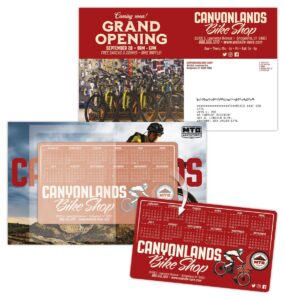
No. A calendar is only one way to make the mailing useful.
An evergreen reference magnet may remain useful without becoming outdated at the end of a calendar year. Kitchen weights and measures, common cooking conversions, household reference information, emergency contacts, or other practical information can give the recipient a reason to keep the piece.
This creates another useful question for the advertiser: Would our members or policyholders benefit more from a yearly calendar, an evergreen reference magnet, or a combination of useful information and contact details?
What If You Already Mail a Paper Calendar?
Some organizations already include a small paper calendar in their annual mailing. That certainly provides more utility than a greeting card alone, but it raises a simple practical question: Where will the recipient keep it?
A homeowner may place a paper calendar on the refrigerator, but will also need an existing magnet to hold it in place.
A calendar magnet combines both functions. The calendar itself attaches directly to the refrigerator, filing cabinet, or another suitable metal surface. It does not require a separate holder.
That also means the company’s branding, phone number, website, and other useful information remain physically attached to the calendar rather than being separated from it.
How Much Information Should Go on the Magnet?
The right amount of content depends on what the organization wants the recipient to use.
A simple contact magnet might need only a logo, one or two phone numbers, a website, and a QR code. A calendar or household reference magnet naturally requires more room.
The goal should not be to fill every available inch. The information needs to remain easy to read and easy to understand.
For more information about balancing magnet size, readability, advertising space, and audience needs, see our guide to schedule magnet design, size, and readability.
What Magnet Sizes Are Available for Direct Mail?
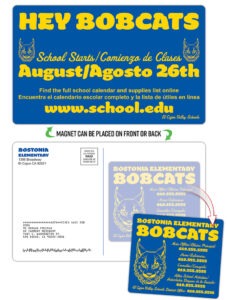
Different mailing objectives can be handled with different magnet sizes. Smaller formats work well when the message and contact information are simple, while larger formats provide more space for calendars, reference information, and branding.
Available sizes include:
- 2″ x 3.5″ magnets — useful for concise contact information, phone numbers, websites, QR codes, and simple reference content.
- 3.5″ x 4″ magnets — provide additional room for a small calendar, reference material, or expanded service information.
- 3.5″ x 6″ magnets — offer more space for multiple contact numbers, useful information, and larger branding.
- 4″ x 7″ magnets — the largest magnet size we offer for postcard-attached direct mail.
Each size has different production and mailing costs. The best choice depends on the amount of information being presented, the quantity being mailed, the desired visual impact, and the available budget.
Should the Decision Be Based Only on Cost Per Piece?
Probably not. Printing costs and postal rates can change, so any meaningful comparison should use current pricing rather than an old published per-piece figure.
However, the underlying question does not change: How much useful life does the organization receive from each piece it pays to put into a recipient’s hands?
A holiday card may accomplish its purpose during the holiday season and then be discarded. A useful magnet may remain visible and accessible for months because the recipient continues to have a reason to use it.
That difference matters when evaluating a marginal increase in cost. Spending a little more per recipient may make sense when that additional expenditure produces a piece with substantially greater potential usefulness.
Can You Still Include a Holiday Greeting?
Yes. Choosing a useful magnet does not mean abandoning the relationship-building purpose of a holiday mailing.
The postcard carrying the magnet can include a holiday greeting, thank-you message, or expression of appreciation. The recipient still receives the seasonal communication, but the mailing also contains something designed to remain useful afterward.
In other words, the choice does not have to be between goodwill and usefulness. A well-planned mailing can provide both.
Could Your Existing Holiday Card Design Become a Magnet?
Yes. Moving from a traditional holiday card to a useful magnet does not necessarily mean abandoning the artwork or creative concept your organization already uses.
A photograph, seasonal illustration, corporate design, community image, or winning artwork from your own holiday card contest can often be adapted for reproduction on a magnet. The same artwork can also appear on the postcard carrying the magnet, creating a coordinated year-end mailing.
Credit unions already provide an excellent example of the creative possibilities. Trax Credit Union’s annual holiday card contest uses winning member artwork on its corporate holiday cards. An organization using a similar approach could preserve that same creative tradition while adapting the artwork to a calendar magnet or another useful magnetic reference piece.
If you already invest time and effort creating a holiday design your members or policyholders enjoy, why limit that artwork to a piece whose usefulness may end with the holiday season?
The artwork can become part of the magnet, the postcard carrier, or both. The magnet can then add a calendar, important phone numbers, a QR code, or useful evergreen reference information without eliminating the visual character of the traditional holiday mailing.
Existing artwork should have suitable image quality and the organization should have the necessary rights to reproduce it. The design may also need to be adjusted for the selected magnet size. However, the underlying creative concept does not have to change simply because the finished piece changes from paper to a magnet.
What Should Credit Unions and Insurers Ask Before Planning the Mailing?
Start with the recipient rather than the product. What information would actually be helpful to the member or policyholder?
Would quick access to claims information help? Would members benefit from having fraud or lost-card numbers readily available? Would a calendar be useful? Would an evergreen household reference magnet make more sense?
Then consider the amount of information, magnet size, quantity, mailing method, design, and current production and postage costs.
The cheapest mailing is not necessarily the one that provides the greatest value. The more useful question may be whether a modest increase in cost can produce a much longer period of usefulness for the recipient.
Could A Year-End Holiday Mailing Accomplish More Than One Purpose?
That may be the better question for a credit union or insurance company planning its year-end holiday mailing.
The mailing can still thank members or policyholders, carry a seasonal message, and preserve an established holiday tradition. At the same time, it can provide a calendar, important contact information, or useful reference material on a magnet that gives the recipient another reason to keep it.
The artwork does not necessarily have to change. The audience does not have to change. Even the purpose of expressing appreciation does not have to change. What can change is how much practical value the recipient receives from the piece after it arrives.
If you are already investing in a year-end holiday mailing, could one thoughtfully designed piece deliver both the goodwill of a holiday greeting and useful value that continues into the new year?
Interested in a Useful Year-End Magnet Mailing?
ScheduleMagnet.com can provide calendar magnets, contact-information magnets, and other useful reference magnets for credit unions, insurance companies, and other consumer-focused organizations.
Available magnet sizes include 2″ x 3.5″, 3.5″ x 4″, 3.5″ x 6″, and 4″ x 7″, depending on the amount of information, design, quantity, and mailing requirements.